Redesign project: Shiksha Bhavishyayaan
An EdTech platform built around psychometric testing for school students designed to identify personal challenges, mental health concerns, and future goal clarity through a structured assessment experience. The product aims to guide students toward self-awareness at a stage in life where direction matters most.
Role
Product Design
Industry
Edtech
Duration
2 months

Step 1. Overview & problem statement
The problem
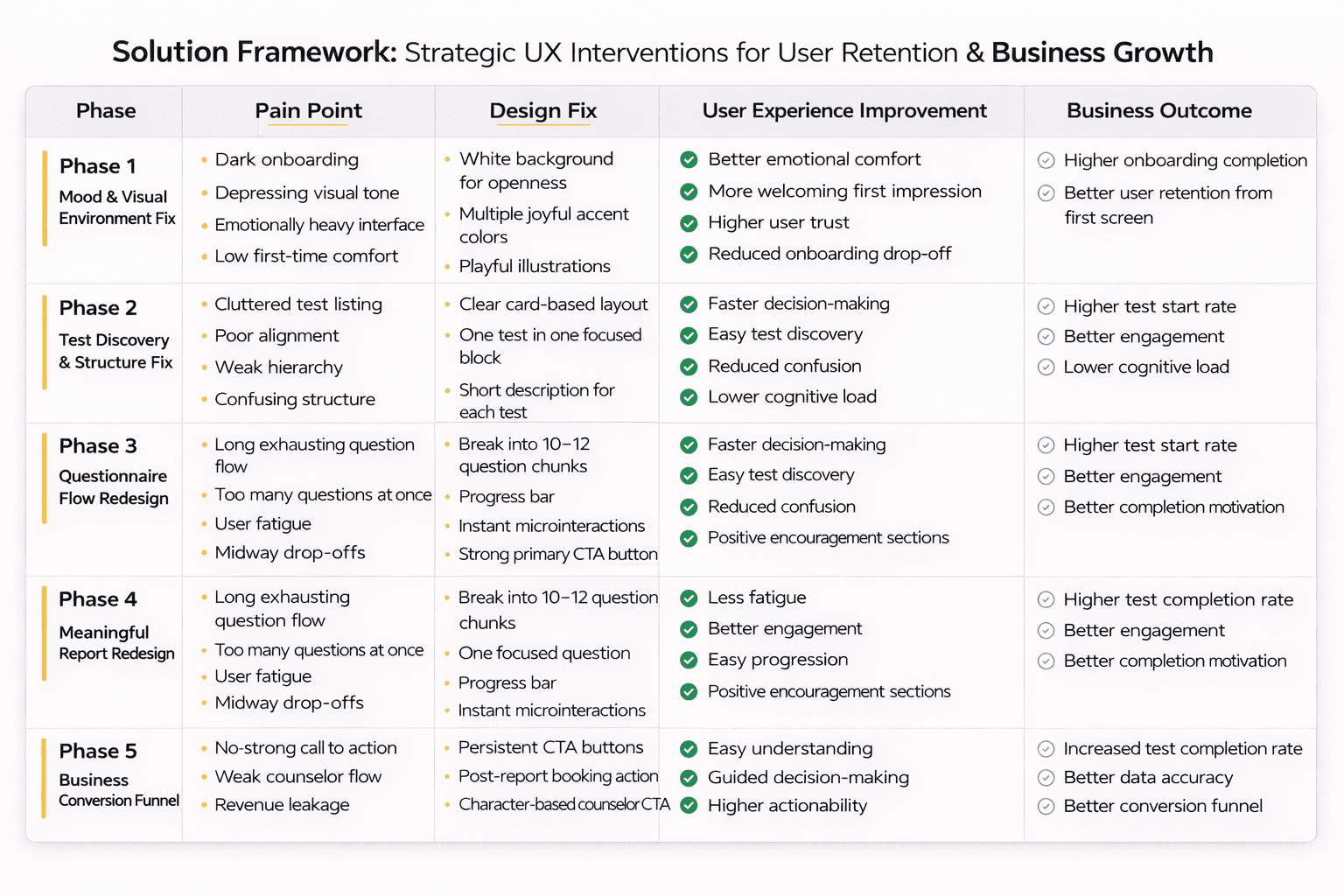
IThe platform existed but wasn't working. Students weren't completing the tests, engagement was low, and the drop-off rate was high. When the founder brought me in, the root cause became clear almost immediately — the design itself was working against the very users it was meant to help. The dark, low-contrast interface was visually heavy and emotionally draining for students already navigating stress and uncertainty. The test format was long, static, and offered no sense of progress or reward. The product was clinically built but humanly broken.My role
End-to-end product redesign UX audit, ideation, wireframing, design system rebuild, and final UI. Worked directly with the founder throughout.
Stage 2. Research & design strategy
Starting with an audit
The first step was a full UX audit of the existing platform — evaluating the visual design, test structure, navigation flow, and emotional tone of the experience. The audit confirmed what the data suggested: the color palette was dark and oppressive, the layout offered no visual relief, and the test format gave students no sense of momentum or progress.Founder interview
I ran in-depth sessions with the founder to understand the product's purpose, the student demographic, and the psychological context students were coming from. A critical insight emerged many users were already in a vulnerable mental state when they opened the platform. The design couldn't just be neutral; it had to actively create a sense of safety, warmth, and encouragement from the first screen.Key Findings
Dark color tones were increasing emotional discomfort in students already dealing with stress and anxiety.
Long, unbroken question formats with no feedback or animation caused users to disengage and abandon mid-test.
No micro-interactions or progress indicators meant students had no sense of how far they'd come or how close they were to finishing.
The visual identity didn't reflect the platform's intent it felt clinical and cold rather than supportive and empowering.
Stage 3. Prototype Development
Ideation & wireframing:
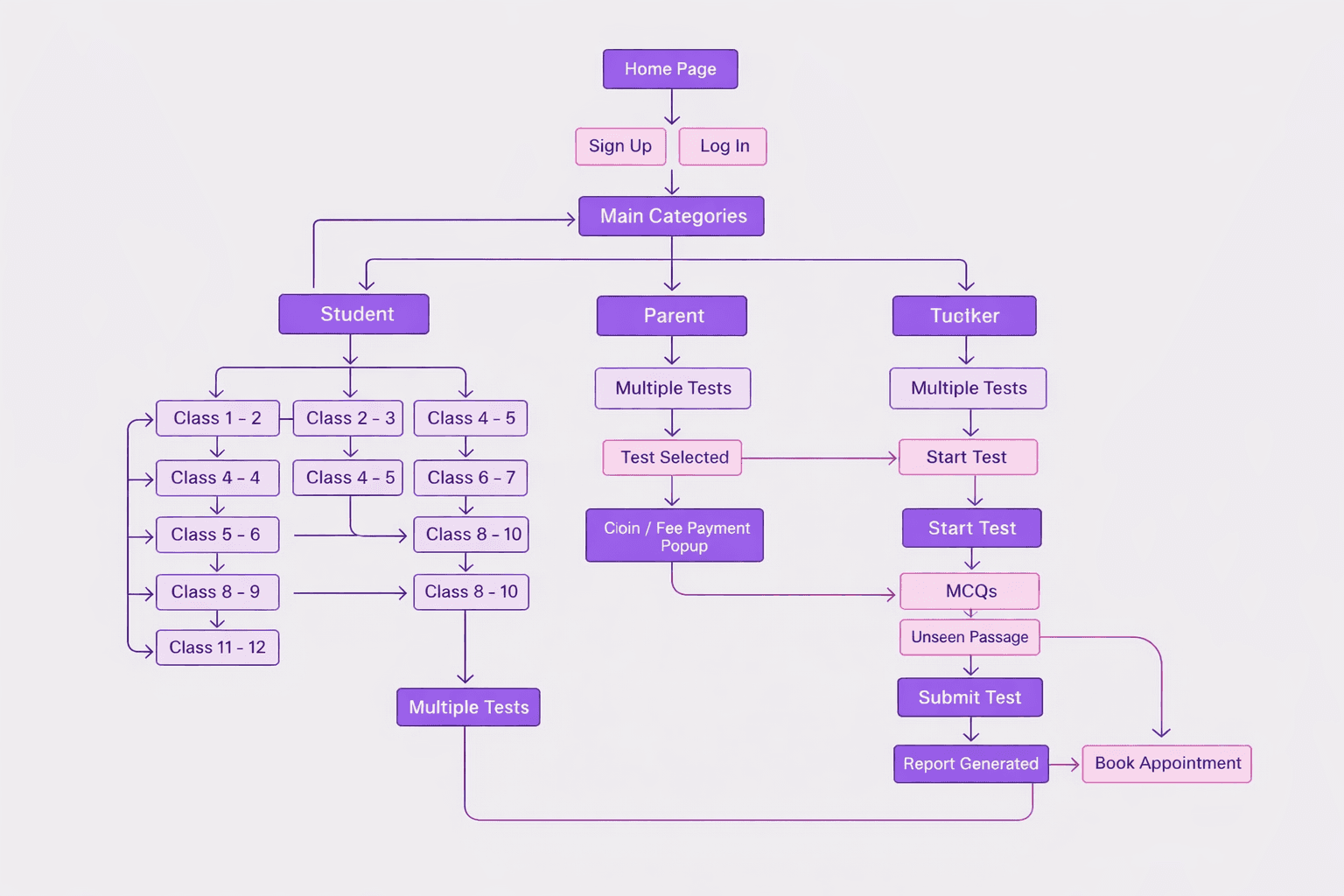
With the audit findings as the foundation, I moved into ideation — restructuring the test format, rethinking the navigation flow, and mapping a user journey that felt encouraging rather than exhausting. Wireframes focused on breaking the test into smaller, digestible segments with clear progress indicators, so students always knew where they were and felt a sense of forward momentum with every question answered.Rebuilding the design system:
Before touching the UI, I rebuilt the design system from the ground up. The color palette shifted entirely replacing dark, heavy tones with a vibrant, multi-color system that created a playful, energetic environment. Typography was redefined for readability and warmth. Iconography was chosen to feel friendly and approachable. Every system-level decision was made with one question in mind: does this make a student feel better or worse the moment they see it.The dopamine design principle
The core design goal for the test experience was to deliver a consistent sense of reward at every interaction micro-animations on question transitions, visual acknowledgment on each answer, and progress milestones that gave students something to move toward. The test needed to feel less like an assessment and more like an experience worth completing.

Stage 4. UI design & refinement
From system to screen
With the design system approved, I moved into the full UI build. The redesigned interface led with colour vibrant, purposeful, and psychologically considered. Each screen had a defined visual hierarchy that guided students through the experience without friction. The test listing was restructured to feel welcoming rather than overwhelming, and the question format was broken into focused single-screen interactions with smooth transitions between each step.Feedback & iteration
After presenting the initial UI direction to the founder, refinements were made based on feedback around the test flow pacing and how certain colour combinations read on lower-quality school devices. Adjustments were made to contrast ratios, spacing, and animation timing to ensure the experience held up across all conditions not just ideal ones.
Stage 5. Implementation & Launch Support
Worked directly with the development team throughout the build phase, ensuring every design detail translated accurately from Figma to the final product. Stayed involved during implementation resolving design challenges as they surfaced and keeping the experience consistent across all states and interactions. Contributed to a smooth product launch and remained engaged post-launch, tracking user feedback to identify what was working and what needed refinement in the next iteration.

Outcomes
The redesigned platform delivered a measurably better experience student engagement with the test format improved, and the founder noted a visible shift in how users were interacting with the product. The combination of a warmer visual identity, restructured test flow, and micro-interactions created an environment where students felt motivated to continue rather than reasons to leave.
More projects

Sonasetu - Retailer
Retailer Dashboard is a centralized management platform that enables retailers to handle bookings, manage their shop operations, and maintain their online storefront portfolio seamlessly.
Client
Saurabh Verma
Date
Apr 9, 2026


Bhavishyaan
Bhavishyann is a student-focused platform that helps individuals manage academic stress and gain clarity about their career direction through guided assessments and insights.
Client
Shiksha Bhavishyaan
Date
May 3, 2025

More projects
Sonasetu - Retailer
Retailer Dashboard is a centralized management platform that enables retailers to handle bookings, manage their shop operations, and maintain their online storefront portfolio seamlessly.
Client
Saurabh Verma
Date
Apr 9, 2026
Bhavishyaan
Bhavishyann is a student-focused platform that helps individuals manage academic stress and gain clarity about their career direction through guided assessments and insights.
Client
Shiksha Bhavishyaan
Date
May 3, 2025
More projects
Sonasetu - Retailer
Retailer Dashboard is a centralized management platform that enables retailers to handle bookings, manage their shop operations, and maintain their online storefront portfolio seamlessly.
Client
Saurabh Verma
Date
Apr 9, 2026
Bhavishyaan
Bhavishyann is a student-focused platform that helps individuals manage academic stress and gain clarity about their career direction through guided assessments and insights.
Client
Shiksha Bhavishyaan
Date
May 3, 2025